

The world of product design is changing faster than ever, thanks to the rapid advancements in artificial intelligence. My journey into building with AI started modestly, experimenting with tools like ChatGPT and then expanding into more specialized platforms like Claude, Perplexity, and, most recently, artifacts. Each step has been a revelation, not just in capability but in the way these tools fundamentally transform how we approach design and prototyping.
The evolution of AI in design
It began with simple experiments — copy-pasting between ChatGPT and Visual Studio Code, running snippets in the terminal, and juggling dependency installations. I remember the excitement of creating my first custom game. Sure, it was just a Flappy Bird clone, but it featured my graphics, characters, and rules. Seeing it work locally felt like a superpower, even if the process was iterative and manual.
When Claude entered the picture, the game changed. Code generation became smarter, requiring fewer iterations to achieve the desired outcome. And then artifacts arrived, and that’s when it truly hit me: this changes everything. The ability to build through natural language — prompting rather than coding — opened new creative pathways.
Building faster, designing better
For years, prototyping high-fidelity interactions or testing new component paradigms felt like bottlenecks in the design process. Tools like Figma and Framer are incredible, but they come with steep time investments. Translating an idea from your head into something tangible often meant spending hours perfecting animations or crafting detailed mockups.
Now, with AI, I can generate functional prototypes in minutes. A well-crafted prompt often delivers results that are “close enough” on the first attempt, letting me quickly iterate and refine. Seeing a concept in a working environment — not just a static prototype — reveals new possibilities and sparks immediate ideas for improvement.
Even more exciting is the ability to share these working prototypes directly with engineers. Instead of handing off a static design or a click-through Figma prototype, I can deliver something dynamic, something close to how it might operate in production. This shift bridges the gap between design and development, fundamentally altering how we collaborate.
The designer-engineer hybrid
AI is pushing us toward a future where designers can become design engineers. Tools like artifacts don’t just speed up our workflow; they empower us to bring our ideas to life without waiting for someone else. For years, I felt blocked because I couldn’t code well enough to execute my visions. I’d have to hire or partner with an engineer, introducing delays and losing some of that initial creative spark.
But now, AI acts as a junior developer, enabling an iterative process where I can build, test, and refine in real time. It’s not just about speed — it’s about independence. The shift feels monumental. We’re no longer constrained by our technical skillset, and this democratization of building opens the door for designers to step into roles that merge creative vision with technical execution.
A global productivity shift
The implications extend beyond individual workflows. As these AI tools become more accessible, free, and even — they have the potential to spark a massive productivity boost across industries. Imagine the collective creativity of humanity, unleashed from technical or resource limitations.
When anyone with an idea can build without barriers, innovation accelerates. This democratization could lead to a renaissance of creativity, where people from all walks of life contribute to solving problems, designing better products, and imagining new futures.
Reimagining the role of high-fidelity design
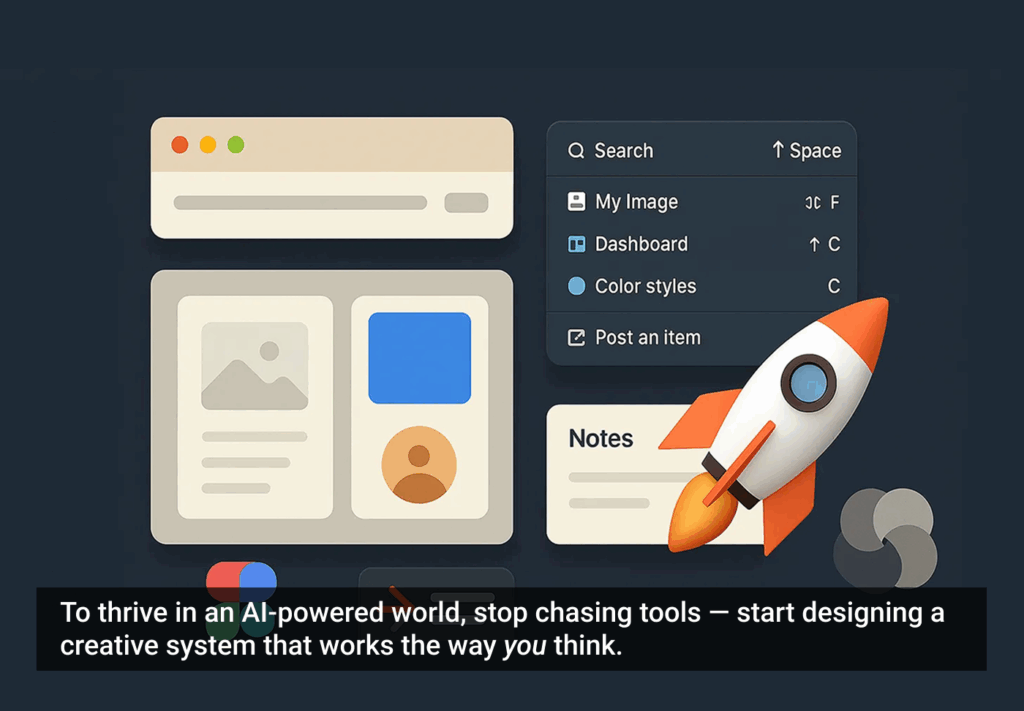
This evolution raises an important question: What does the future hold for tools like Figma? If AI can generate high-fidelity prototypes that operate almost like production code, will designers still invest hours in pixel-perfect and advanced prototyping features? I still think tools like Figma or other design tools will be really valuable. A quick way to get a head start on your live prototype is often having a solid design as a base that a tool like Cursor or Claude artifacts can work from. It also makes the prompt engineering a bit easier if you can speak better visually.
The answer might lie in how we define our roles. Instead of focusing on tools and workflows, designers can focus on vision, strategy, and problem-solving. High-fidelity design won’t disappear — it will transform. Prototyping in AI environments means iterating faster, collaborating more effectively, and delivering solutions that are closer to reality from the start.
Where we go from here
AI isn’t just a tool; it’s a collaborator. A really good one at that.
For designers, this means rethinking how we work, how we communicate, and what skills we prioritize. It’s a chance to help shape a future where the barriers between creativity and execution dissolve.
Remember, AI isn’t meant to replace you; it’s meant to elevate you.
Stay curious.
The article originally appeared on Medium.
Featured image courtesy: Jacquelyn Halpern.