
Flag

We stand with Ukraine and our team members from Ukraine. Here are ways you can help

Get exclusive access to thought-provoking articles, bonus podcast content, and cutting-edge whitepapers. Become a member of the UX Magazine community today!

Home ›› Business Value and ROI ›› Experiment, Share, Evolve, Repeat

Experiment, Share, Evolve, Repeat

by Josh Tyson
3 min read
Share this post on
Tweet
Share
Post
Share
Email
Print

Save

Results of the Work Environment for Digital Practitioners category of the Design for Experience awards show what agencies are doing to stay vibrant and relevant.

Digital design agencies are a bit like snowflakes. But while no two seem to be quite alike, they do share some common purposes. The first, of course, is to do top-notch work for clients—something that’s become both more challenging and more rewarding as the tenets and processes behind experience design are more familiar to businesses of every stripe.

The second is to attract and retain the brightest talent. This task has become a little trickier in the past year, with at least one big agency in San Francisco shutting down and another becoming the in-house design team at Capital One. There’s been some debate about what this means for the future of agencies—with Peter Merholz sounding the alarm and Andy Budd pumping the brakes—but the simple fact remains that to stay ahead of the competition, agencies need to create environments where practitioners can thrive.

For San Diego’s Digital-Telepathy, winner of the Design for Experience award for Work Environment for Digital Practitioners, the shining path to success revealed itself to be something more than a single avenue.

Along with making some of the same considerations that other agencies make—like being careful which clients they work with (“Yep, we’ve got a ‘No assholes’ rule ;)”)—their approach entails lots of experimentation and a willingness to share learnings with other practitioners and teams through their Betterment blog.

In the year that’s passed since they won their DfE award, Digital-Telepathy has continued experimenting with their work environment.

Since winning their @DfExp award, @dtelepathy has continued experimenting with their work environment

“We’ve reconfigured our conference rooms multiple times but have finally figured out the best setup. We have four uniquely-appointed conference rooms and two workshop spaces to accommodate large on-site meetings with clients,” says Digital Strategist Brent Summers.
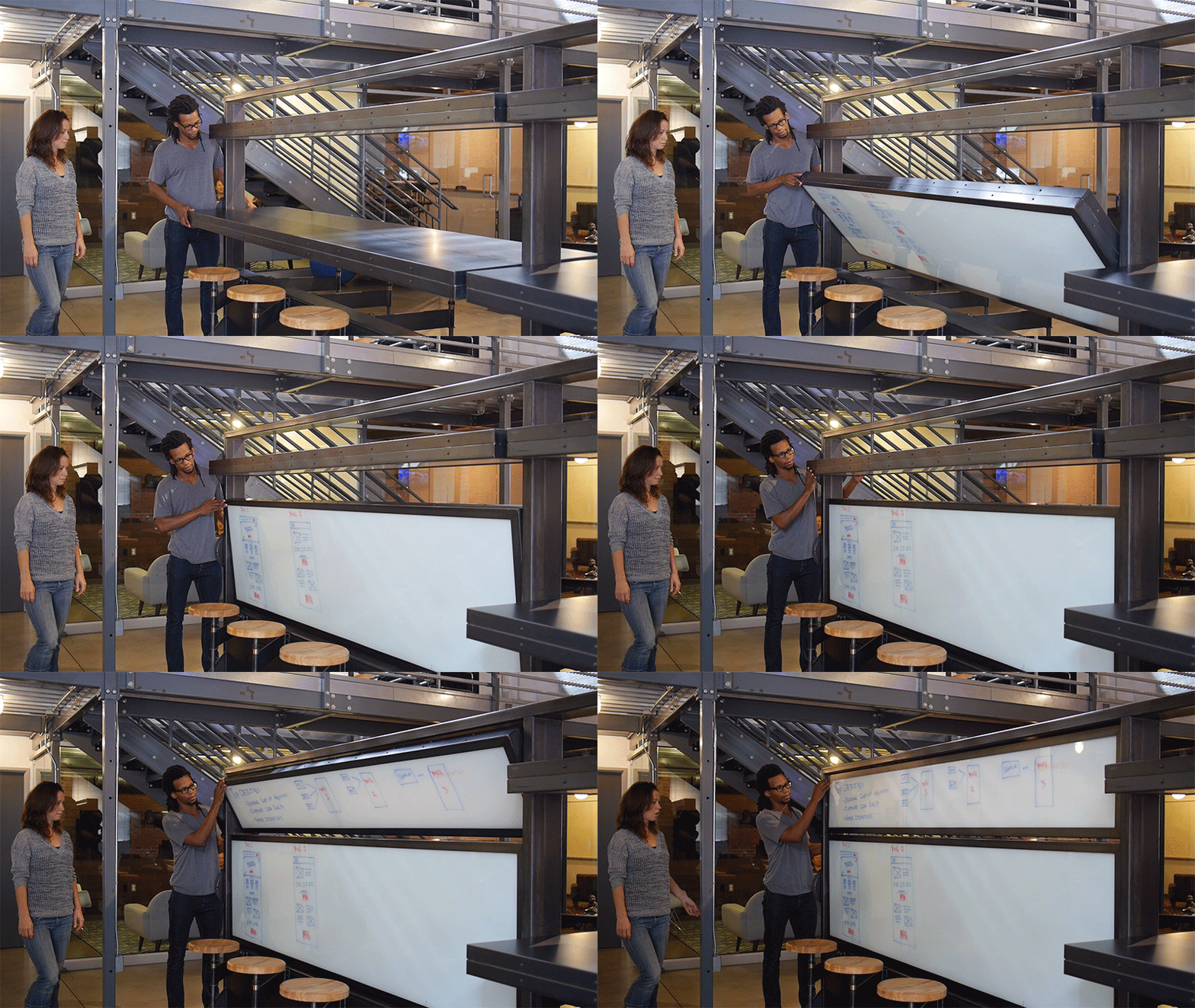
Whiteboard bar gif

They’ve also continued to build out their audio-video setup and now have 15 large digital displays with an assortment of Raspberry Pis, Chromecasts, Jabra Speakers, IPEVO Cameras, and web cams. All good stuff to keep designers tinkering.
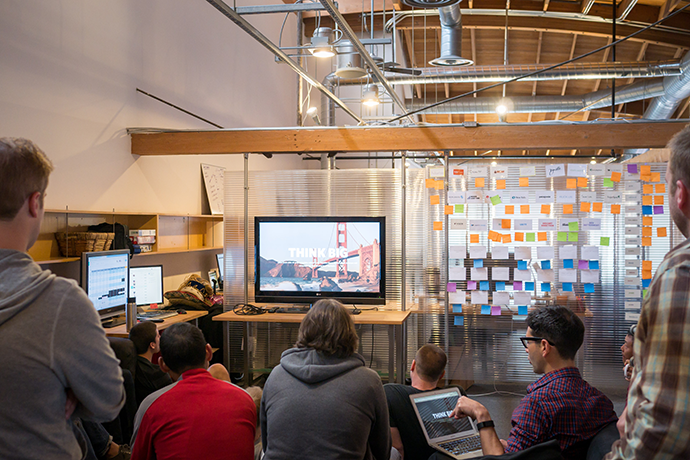
Digital-Telepathy a/v setup

New staffing choices and service offerings have also been part of the evolution—resulting in the hiring of a full-time copywriter, an accountant, and a talent ambassador who is instrumental in finding the new teammates and advocating for their workforce on a daily basis. The role exists alongside another leadership post, the Director of Vitality, which remains instrumental in ensuring employee satisfaction and cultivating Digital-Telepathy’s culture.

As the landscape continues to change for agencies, practitioners, in-house teams, and everyone else working in experience design, the core elements behind Digital-Telepathy’s succss—experiement, share, evolve, repeat—will serve us all well.

Finalists in the Work Environment for Digital Practitioners also shared some noteworthy approaches to keeping their agencies fresh. Judges were impressed by Myplanet Digital’s focus on engagement, which showed up in statements like this: “For each attribute of an engaged employee, we support a substantial measurement and coaching effort.” They were also intrigued by the co-presidency concept of distributed leadership at The Nerdery. Boulder Colo.’s Slice of Lime stood out with their “First Friday” meetings that give employees a chance to discuss what’s working and what’s not working.

The 2014 DfE awards still accepting applications! If you’ve been a part of creating an experience that makes a difference, apply today.
post authorJosh Tyson

Josh Tyson
Josh Tyson is the co-author of the first bestselling book about conversational AI, Age of Invisible Machines. He is also the Director of Creative Content at OneReach.ai and co-host of both the Invisible Machines and N9K podcasts. His writing has appeared in numerous publications over the years, including Chicago Reader, Fast Company, FLAUNT, The New York Times, Observer, SLAP, Stop Smiling, Thrasher, and Westword. 

Tweet
Share
Post
Share
Email
Print

Related Articles

Forget linear workflows — today’s creative process is dynamic, AI-assisted, and deeply personal. Learn how to build a system that flows with you, not against you.

Article by Jim Gulsen
The Creative Stack: How to Thrive in a Nonlinear, AI-Assisted World
  • The article explores the shift from linear to nonlinear, AI-assisted creative workflows.
  • It shares practical ways to reduce friction and improve flow by optimizing tools, habits, and environments.
  • It argues that success comes from designing your own system, not just using more tools.
Share:The Creative Stack: How to Thrive in a Nonlinear, AI-Assisted World
7 min read

How is AI really changing the way designers work, and what still depends on human skill? This honest take cuts through the hype to show where AI helps, where it falls short, and what great design still demands.

Article by Oleh Osadchyi
The Real Impact of AI on Designers’ Day-To-Day and Interfaces: What Still Matters
  • The article explores how AI is reshaping designers’ workflows, offering speed and support across research, implementation, and testing.
  • It argues that while AI is useful, it lacks depth and context — making human judgment, critical thinking, and user insight indispensable.
  • It emphasizes that core design principles remain unchanged, and designers must learn to integrate AI without losing their craft.
Share:The Real Impact of AI on Designers’ Day-To-Day and Interfaces: What Still Matters
9 min read

What if you could build software just by talking to your computer? Welcome to vibe coding, where code takes a back seat and the vibe leads.

Article by Jacquelyn Halpern
Vibe Coding: Is This How We’ll Build Software in the Future?
  • The article introduces vibe coding, using AI to turn natural language into working code, and shows how this approach lets non-coders build software quickly and independently.
  • The piece lists key tools enabling vibe coding, like Cursor, Claude, and Perplexity, and notes risks like security, overreliance on AI, and the need for human oversight.
Share:Vibe Coding: Is This How We’ll Build Software in the Future?
7 min read

Join the UX Magazine community!

Stay informed with exclusive content on the intersection of UX, AI agents, and agentic automation—essential reading for future-focused professionals.

Hello!

You're officially a member of the UX Magazine Community.
We're excited to have you with us!

Thank you!

To begin viewing member content, please verify your email.

Tell us about you. Enroll in the course.

    This website uses cookies to ensure you get the best experience on our website. Check our privacy policy and