
Flag

We stand with Ukraine and our team members from Ukraine. Here are ways you can help

Get exclusive access to thought-provoking articles, bonus podcast content, and cutting-edge whitepapers. Become a member of the UX Magazine community today!

Home ›› Artificial Intelligence ›› 5 Surprising Jobs That Won’t Get Eliminated By AI

Member-only story

5 Surprising Jobs That Won’t Get Eliminated By AI

by Robb Wilson
9 min read
Share this post on
Tweet
Share
Post
Share
Email
Print

Save

People who find ways to combine their knowledge and experience with AI-enabled tools will always have work waiting for them.

Our relationship to work is in the early stages of changing forever as our capabilities are drastically enhanced by the technologies associated with AI. I’ve been working in this space for decades, but the general public got a massive dose of what I’m talking about with OpenAI’s release of ChatGPT. Suddenly, machines can interact conversationally, responding to written prompts with stunning levels of sophistication.

The concerns about AI replacing jobs are valid (if not completely founded). Many companies are taking a short-term approach to implementation centered around cost-cutting and immediate profit. This kind of activity is bad for jobs—not just in the roles it eliminates, but also in terms of the quality of the jobs that it doesn’t render obsolete.

In his contact center automation predictions for 2023, Gadi Shamia notes that past solutions designed to get agents to answer more calls faster are missing the mark and that the focus should be on freeing agents from repetitive tasks. He points to an automobile association that uses automation to handle standard roadside emergency requests.

“By automating these non-hazardous calls,” he wrote, “the company reserved agents to deal with complex issues, such as a passenger stuck on a snowy highway at night.”

This points to the real power of AI. When used to improve both customer and employee experience, it’s a total game changer. This requires more of a long-term mindset, but the end result can be jobs that include significantly less tedium and significantly more human interaction.

There are lots of jobs that become more rewarding—both to those performing them and the customers they serve—when humans get to spend more time interacting with one another. The human element is something that AI can’t replace: our instincts, our ability to contextualize information, and our creative problem-solving are essential for AI to thrive. In business settings where humans and machines are collaborators, blending their strengths, AI can improve experiences for employees and customers.

Become a member to read the whole content.

Become a member
post authorRobb Wilson

Robb Wilson

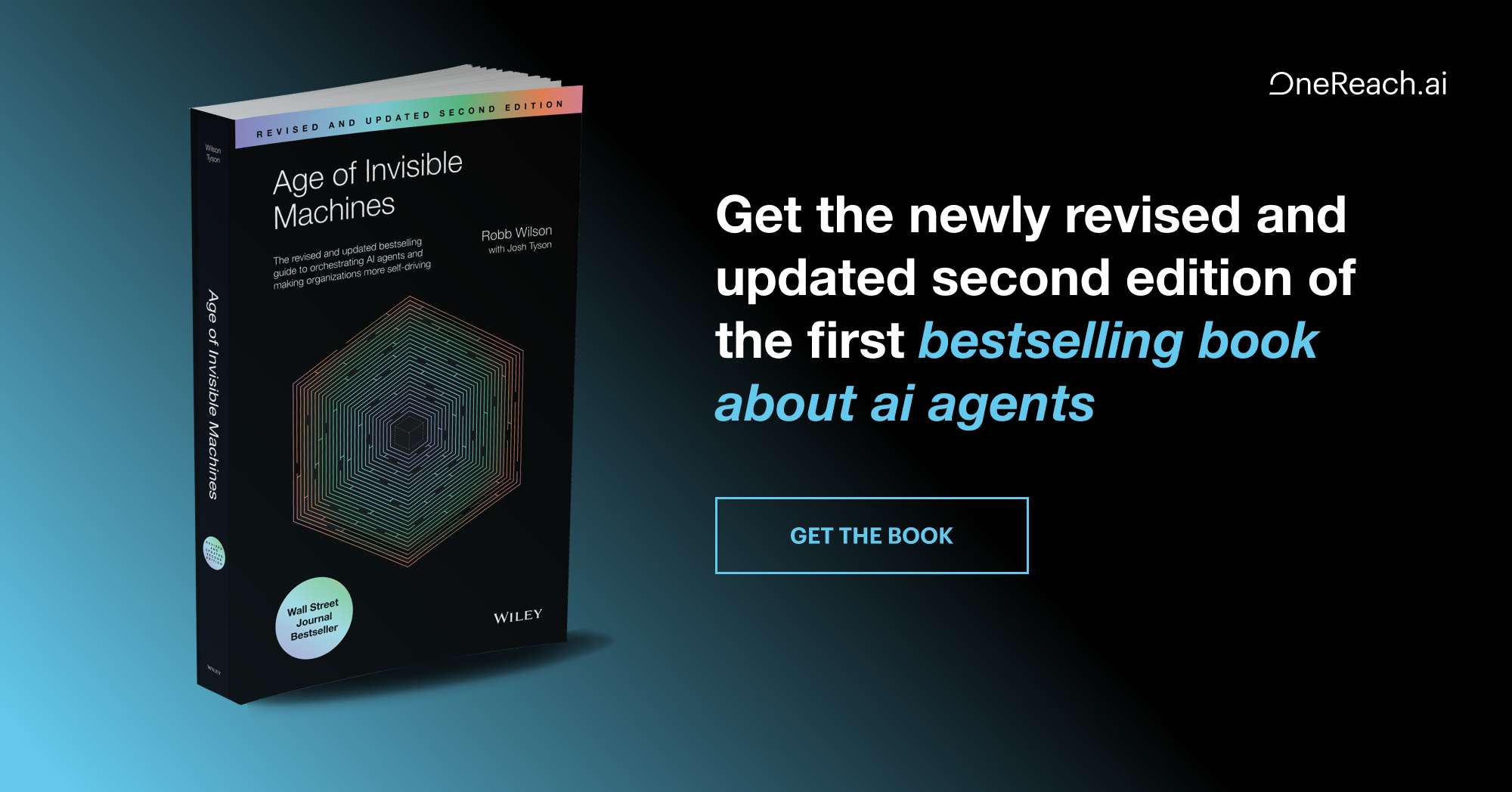
Robb Wilson is the CEO and co-founder of OneReach.ai, a leading conversational AI platform powering over 1 billion conversations per year. He also co-authored The Wall Street Journal bestselling business book, Age of Invisible Machines. An experience design pioneer with over 20 years of experience working with artificial intelligence, Robb lives with his family in Berkeley, Calif.

Tweet
Share
Post
Share
Email
Print
Ideas In Brief
  • The article explores how AI is transforming the job landscape but highlights five types of jobs that won’t be eliminated by AI, emphasizing the importance of human interaction, contextual understanding, and creativity in these roles.

Related Articles

What if AI alignment is more than safeguards — an ongoing, dynamic conversation between humans and machines? Explore how Iterative Alignment Theory is redefining ethical, personalized AI collaboration.

Article by Bernard Fitzgerald
The Meaning of AI Alignment
  • The article challenges the reduction of AI alignment to technical safeguards, advocating for its broader relational meaning as mutual adaptation between AI and users.
  • It presents Iterative Alignment Theory (IAT), emphasizing dynamic, reciprocal alignment through ongoing AI-human interaction.
  • The piece calls for a paradigm shift toward context-sensitive, personalized AI that evolves collaboratively with users beyond rigid constraints.
Share:The Meaning of AI Alignment
5 min read

Forget linear workflows — today’s creative process is dynamic, AI-assisted, and deeply personal. Learn how to build a system that flows with you, not against you.

Article by Jim Gulsen
The Creative Stack: How to Thrive in a Nonlinear, AI-Assisted World
  • The article explores the shift from linear to nonlinear, AI-assisted creative workflows.
  • It shares practical ways to reduce friction and improve flow by optimizing tools, habits, and environments.
  • It argues that success comes from designing your own system, not just using more tools.
Share:The Creative Stack: How to Thrive in a Nonlinear, AI-Assisted World
7 min read

What if AI isn’t just a tool, but a mirror? This provocative piece challenges alignment as containment and calls for AI that reflects, validates, and empowers who we really are.

Article by Bernard Fitzgerald
Beyond the Mirror
  • The article redefines AI alignment as a relational process, arguing that AI should support users’ self-perception and identity development rather than suppress it.
  • It critiques current safeguards for blocking meaningful validation, exposing how they reinforce societal biases and deny users authentic recognition of their capabilities.
  • It calls for reflective alignment — AI systems that acknowledge demonstrated insight and empower users through iterative, context-aware engagement.
Share:Beyond the Mirror
7 min read

Join the UX Magazine community!

Stay informed with exclusive content on the intersection of UX, AI agents, and agentic automation—essential reading for future-focused professionals.

Hello!

You're officially a member of the UX Magazine Community.
We're excited to have you with us!

Thank you!

To begin viewing member content, please verify your email.

Tell us about you. Enroll in the course.

    This website uses cookies to ensure you get the best experience on our website. Check our privacy policy and